Pages

Thursday, 15 June 2017

Chemical Reations!

Chemical reactions


First  you will need:
  • Plastic bag (Medium size)
  • 20mls of baking soda
  • 50mls of vinegar
  • Plastic bottle (medium size)
  • 125mls of vinegar
  • 50mls of baking soda

First you open up your plastic bag and ready to pour in your 20mls of baking soda to the corner. Twist where the baking soda is, and pour in the 50mls of vinegar onto the other side. Shake your hardest and the gas inside the baking soda and vinegar will fill up the plastic bag. Afterwards you can pop it or throw it in the bin.

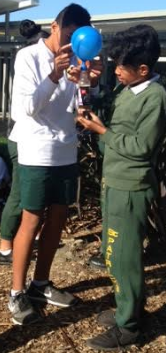
The next experiment you get a bottle that is medium size and set your 125mls of vinegar and 50mls of baking soda on the table. You will need one  unblown balloon. Then you stretch the balloon so it could form a perfect circle. Pour in your vinegar into the bottle and start adding your baking soda to the balloon and It will look like this….

Screenshot 2017-06-15 at 12.35.15 PM.png

Wednesday, 14 June 2017

How can heat create bubbles!

Observe safe practices when conducting science experiments.
How can heat create bubbles!

First, put on some safety glasses and some protective armour if you want. You will need one methylated spirits burner, test tube tweezer, matches and 5 mm tube. Get some syrup and add to your tube and leave it in the freezer until it’s frozen. Once the syrup is frozen, get your methylated spirits burner and light it on fire with your matches.


Get out your test tube tweezer and hold firmly the tube and face it where to not burn anyone. It will start to form little rings until big beautiful rings. You can blow out the flame and put it against your body to feel a heat. When it’s cooled you could smell it or drink it if you want.

Friday, 9 June 2017

Technicraft!

giphy (1).gif
Now that I have your attention....Read on

First, my partner and I were given 10 cents by the teacher, we were to see if the shaving cream can take on the 10 cents weight. The 10 cents went through the shaving cream so that means it is liquid.

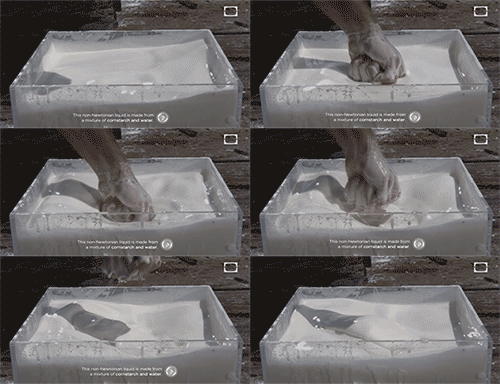
We tested out cornflour and water together which is called colloid. It was mixed together and we got a cooking knife and use the back of it and banged on the colloid which is hard but if you gently push down the end of the knife slowly and it will sink down to the bottom. And the image above shows you what it looks like.


Enjoy:

Thursday, 6 April 2017

Technicraft!

Today we made a dutch apple cake and this is our recipe:

Ingredients:
  • 100g butter
  • 190g plain flour
  • 1 teaspoon baking powder
  • 200g caster sugar
  • 1 egg
  • 190g plain flour
  • 1 teaspoon baking powder
  • Pinch of salt
  • 1 apples - peeled, cored and each cut into quarters.
  • 3 tablespoon sugar
  • 1 teaspoon cinnamon
Image result for dutch apple cake recipe
Method:
  1. Heat oven to 180C and fan force to 180C.
  2. Cream the margarine and sugar together until light and fluffy. In a separate bowl, beat the eggs with a fork and put it in another bowl.
  3. Mix the eggs, a little at a time. Sieve in the flour and baking powder.
  4. Spread the mixture into the cake tin.
  5. Get 1 apple and peel and core the apple and slice into quarters. Arrange the apple slices over the cake mix and then sprinkle the cinnamon and sugar on top.
  6. Place in the oven and bake for around 20 minutes, until golden brown and springy to the touch.

Enjoy: